
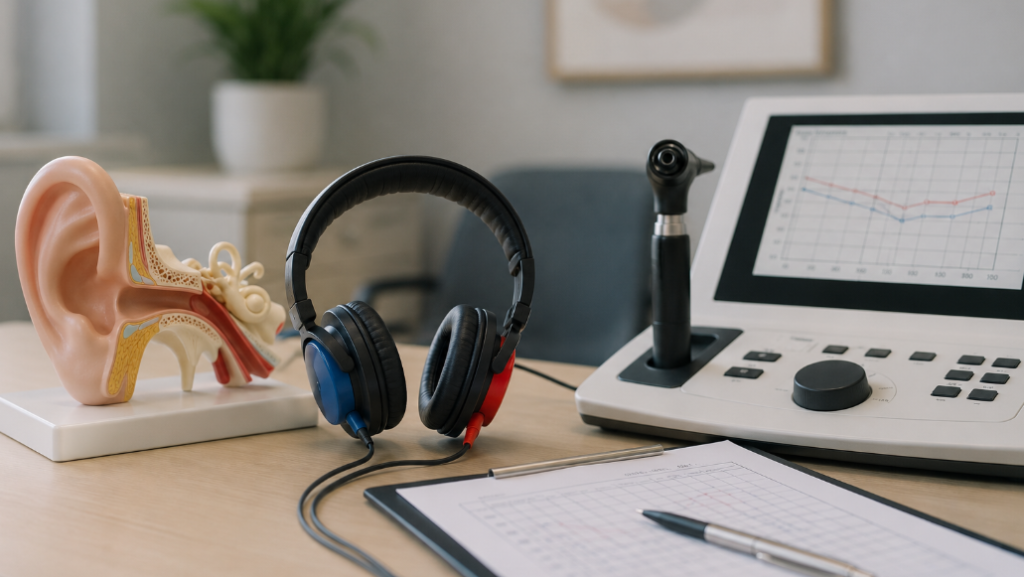
Hearing Screening vs. Full Hearing Diagnostic Test: What's the Difference?
Hearing Screening VS Full Hearing Diagnostic is an important distinction to understand when it comes to looking after your hearing health. While both types of hearing assessments are designed to identify hearing difficulties, they serve very different purposes and provide different levels of information.
Many people assume that if they have had a hearing screening, they have had a complete hearing test. However, a screening is generally designed to identify whether further investigation may be needed, while a full diagnostic assessment provides a much more detailed picture of your hearing.
Understanding Hearing Screening VS Full Hearing Diagnostic can help you make informed decisions about your hearing and ensure you receive the appropriate care when concerns arise.
What Is a Hearing Screening?
A hearing screening is a quick and straightforward assessment designed to identify whether a potential hearing problem may be present.
Think of it as an initial check rather than a diagnosis. Much like a blood pressure check can indicate that something may need further attention, a hearing screening can indicate that a more comprehensive hearing assessment may be recommended.
Hearing screenings are commonly offered at:
- Community health events
- Schools
- Occupational health programmes
- Pharmacies
- Wellness days
- Public awareness campaigns
During a typical screening, you may listen to different tones through headphones and indicate when you can hear them. The process is usually quick and may only take a few minutes.
The key point in the Hearing Screening VS Full Hearing Diagnostic comparison is that a screening is intended to identify a possible concern, not investigate it in detail.
What Can a Hearing Screening Tell You?
A hearing screening can help determine whether your hearing appears to fall within an expected range or whether further assessment may be advisable.
Essentially, it can help answer the question:
“Do I need a more comprehensive hearing assessment?”
However, a hearing screening generally cannot provide the same detailed information as a diagnostic hearing evaluation. It cannot fully determine:
- The type of hearing loss
- The degree or severity of hearing loss
- The possible cause of the hearing difficulty
- Whether one ear is affected more than the other
- Which frequencies are most affected
- What treatment or management options may be appropriate
This is why understanding Hearing Screening VS Full Hearing Diagnostic is so important. A screening can be a valuable first step, but it should not be confused with a diagnosis.
What Is a Full Hearing Diagnostic Test?
A full hearing diagnostic test is a comprehensive hearing assessment performed by an audiologist.
Unlike a screening, which looks for an indication that hearing difficulties may be present, a diagnostic evaluation investigates your hearing in much greater detail.
The purpose of a diagnostic assessment is to establish important information such as:
- Whether hearing loss is present
- The degree of hearing loss
- The type of hearing loss
- Which frequencies are affected
- Whether one or both ears are involved
- Whether there are factors that may be contributing to the hearing difficulty
- What management or treatment options may be appropriate
This detailed information gives the audiologist a clearer understanding of your individual hearing profile and allows them to recommend care based on your specific needs.
In simple terms, Hearing Screening VS Full Hearing Diagnostic comes down to the difference between identifying a possible problem and understanding that problem in detail.
What Happens During a Diagnostic Hearing Test?
A comprehensive hearing evaluation can involve several different components. The exact assessments performed will depend on your symptoms, history and individual circumstances.
Case History Discussion
Your audiologist will usually begin by discussing your hearing concerns and relevant background information.
They may ask about:
- Changes you’ve noticed in your hearing
- Your medical history
- Your family history of hearing loss
- Exposure to loud noise
- Tinnitus, such as ringing or buzzing in the ears
- Dizziness or balance difficulties
- Previous ear problems or hearing assessments
This information provides important context and helps the audiologist determine which assessments may be appropriate.
Ear Examination
An audiologist may also examine your ears using an otoscope.
This allows them to look for potential issues such as:
- Earwax blockages
- Signs of infection
- Inflammation
- Other visible abnormalities within the ear canal
In some cases, hearing difficulties can be associated with an issue that can be identified through a physical examination of the ear.
Pure Tone Audiometry
Pure tone audiometry is the part of a hearing assessment that many people are most familiar with.
You will typically wear headphones and respond whenever you hear a sound. Different pitches and volumes are presented to determine the softest sounds you can hear at various frequencies.
The results are recorded on an audiogram, creating a detailed visual representation of your hearing ability.
This is one of the areas where Hearing Screening VS Full Hearing Diagnostic becomes particularly clear. A comprehensive assessment provides much more detailed information about your hearing across different frequencies.
Speech Testing
Hearing tones is only part of the picture. Being able to understand speech is equally important.
Speech testing assesses how well you can hear and understand spoken words. Depending on the assessment, this may involve listening to speech in quiet conditions and, where appropriate, situations that introduce background noise.
This information can be particularly useful because someone may be able to hear sounds but still struggle to understand conversations clearly.
Additional Testing
Depending on your symptoms and the findings from the initial assessment, your audiologist may recommend additional tests.
These assessments can provide further information about the middle ear, inner ear and auditory system and help establish a more complete understanding of the hearing difficulty.
Hearing Screening VS Full Hearing Diagnostic: Why Does the Difference Matter?
Imagine visiting a doctor because you aren’t feeling well.
A quick temperature check might indicate that something isn’t quite right, but it would not tell the doctor exactly what is causing your symptoms. A more detailed examination would be needed to understand what is happening and determine the appropriate next steps.
The same basic principle applies to hearing healthcare.
A screening can indicate that further investigation may be needed. A diagnostic hearing assessment goes further by examining your hearing in detail and helping the audiologist understand the nature of the problem.
This is why Hearing Screening VS Full Hearing Diagnostic is more than simply a difference in terminology. The two assessments have different purposes.
A screening can help identify a potential concern.
A diagnostic assessment can help explain that concern.
Who Should Consider a Full Diagnostic Hearing Test?
A comprehensive hearing evaluation may be appropriate if you have noticed changes in your hearing or communication.
You may want to speak to an audiologist if you:
- Frequently ask people to repeat themselves
- Struggle to follow conversations in noisy environments
- Turn the television volume up higher than other people prefer
- Experience ringing or buzzing in your ears
- Notice a sudden or noticeable change in your hearing
- Feel that people are mumbling
- Have a family history of hearing loss
- Have regular exposure to loud noise
- Have failed a hearing screening
- Feel that hearing conversations has become more tiring than it used to be
Even when hearing difficulties seem relatively mild, having them assessed can provide useful information and help you understand whether further management may be beneficial.
Why Early Hearing Assessment Matters
Hearing loss can develop gradually, which means that many people don’t immediately realise how much their hearing has changed.
You may find yourself asking people to repeat themselves more often, increasing the television volume or avoiding noisy social environments without recognising that these changes could be linked to your hearing.
Early assessment can help identify potential problems sooner and provide an opportunity to discuss appropriate options with a hearing healthcare professional.
The earlier a hearing concern is properly investigated, the sooner you can understand what is happening and what steps may be available to support your communication and quality of life.
This is another important reason to understand Hearing Screening VS Full Hearing Diagnostic rather than assuming that one type of assessment is interchangeable with the other.
Hearing Screening VS Full Hearing Diagnostic: The Bottom Line
Both hearing screenings and full diagnostic hearing tests have an important role to play in hearing healthcare, but they are not the same thing.
A hearing screening is a quick initial check designed to identify whether a potential hearing problem may require further investigation.
A full hearing diagnostic test is a comprehensive assessment designed to provide a detailed understanding of your hearing, including the type and degree of hearing loss and other relevant findings.
So, when considering Hearing Screening VS Full Hearing Diagnostic, remember:
A screening can tell you that there may be a problem. A diagnostic assessment helps determine what that problem is.
If you’ve noticed changes in your hearing, struggled to follow conversations or simply have concerns about your hearing health, speaking to an audiologist can help you get clearer answers.
Your hearing is an important part of how you communicate, connect and experience the world around you. Getting the full picture is always better than making assumptions.
